




Environment and Circular Economy
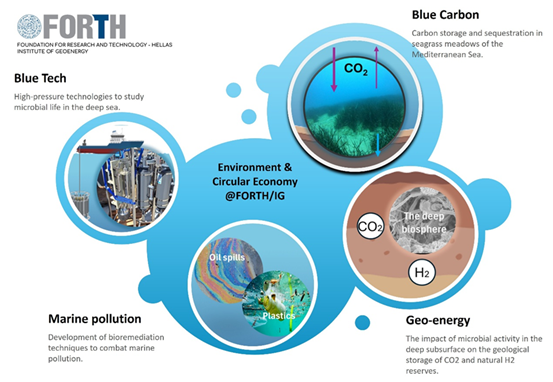
We focus on understanding and mitigating the environmental impacts of energy resource exploitation. Our research encompasses the monitoring and assessment of environmental pollution, the development of bioremediation strategies, and nature-based solutions to reduce CO₂ emissions. We also advance innovative materials and technologies that enable energy and resource reuse within a circular-economy framework.
Blue Technology
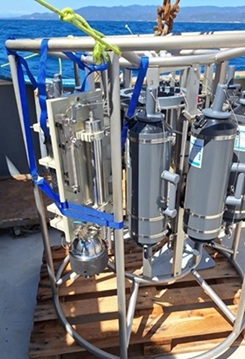
We pioneer high-pressure technologies to study microbial life in extreme ecosystems, from the deep sea to the deep biosphere. At the High-Pressure Facility of FORTH, we can reproduce conditions up to 60 MPa, equivalent to 6,000 m below sea level—covering the entire water column of the Mediterranean Sea. These capabilities enable us to uncover how microbial processes shape ocean biogeochemical cycles, including long-term carbon storage in the deep ocean, and support new opportunities for marine biodiscovery.
Marine Pollution
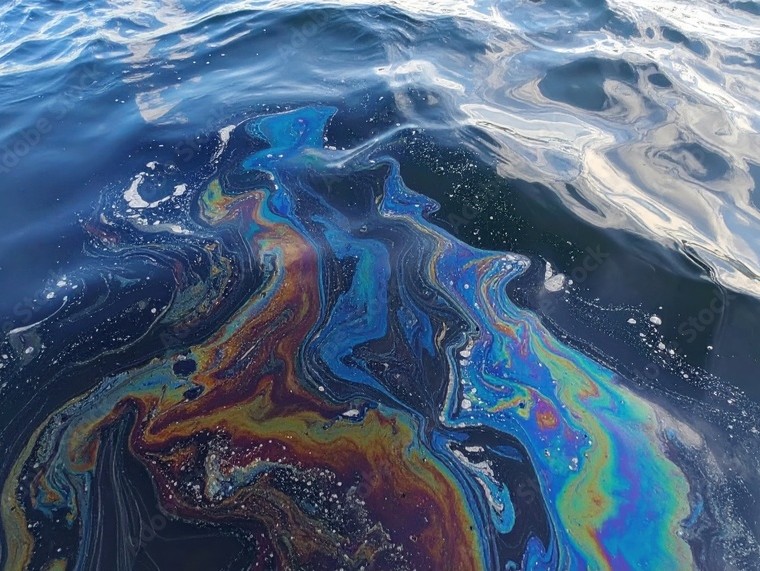
We study the sources, distribution, and impacts of marine pollutants—particularly hydrocarbons and microplastics—to develop effective strategies for monitoring, assessing, and mitigating pollution in both coastal and open-ocean environments. In recent years, our research has centered on deep-water oil spills in the Eastern Mediterranean, using the High-Pressure Infrastructure of FORTH/IMBB to simulate deep-sea conditions and investigate microbial degradation processes and bioremediation potential. Our data are integrated into advanced oil-spill models that predict the transport, dispersion, and attenuation of oil and assess environmental impacts. From producing biosurfactants under high pressure to evaluating innovative bioremediation strategies, we contribute to sustainable, evidence-based solutions for protecting marine ecosystems.
Blue Carbon
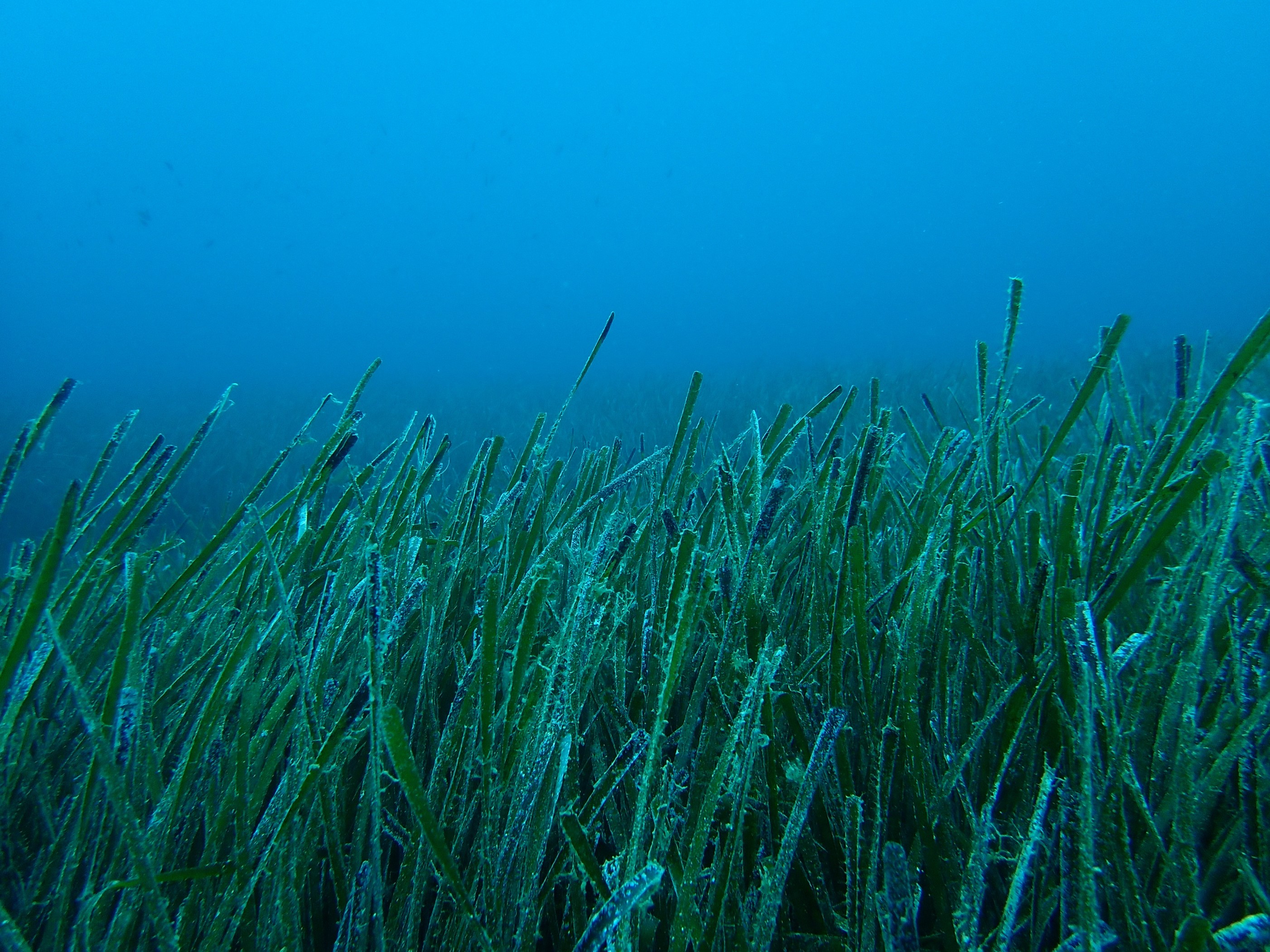
Our research explores the role of marine ecosystems in carbon sequestration, aiming to enhance natural carbon sinks and support climate change mitigation through ecosystem-based approaches. We focus on Posidonia oceanica seagrass meadows in the Mediterranean Sea, where we measure carbon stocks and accumulation rates, identify the sources of stored carbon using stable isotope mixing models, and evaluate CO₂ emissions under different management scenarios.
Geo-energy
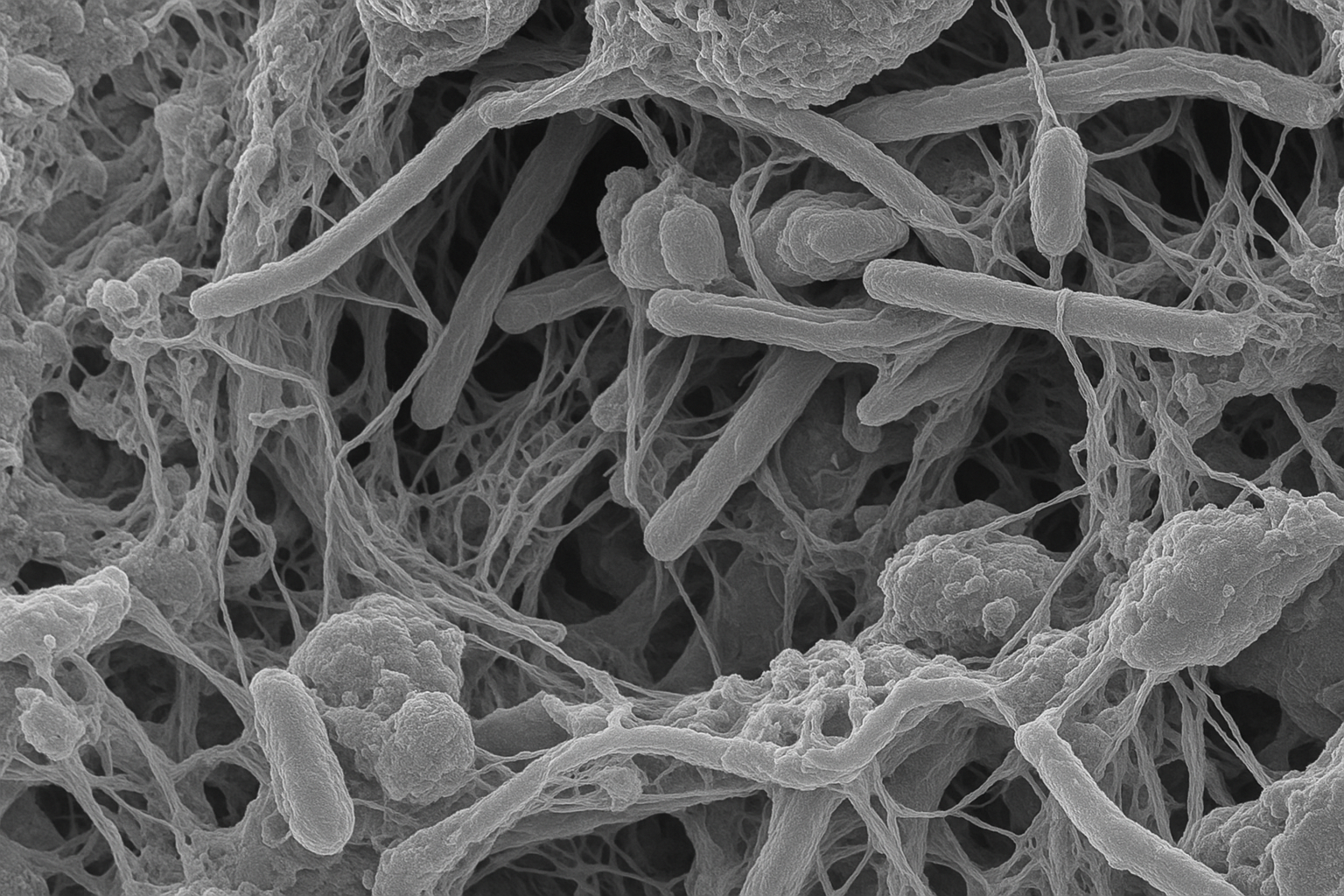
Our research examines the role of subsurface microbial activity in energy-related processes, with a focus on its implications for emerging technologies such as underground hydrogen storage and carbon capture and storage (CCS).
We investigate how microorganisms interact with injected gases—such as hydrogen or CO₂—impacting storage efficiency, safety and long-term stability. Through this research, we aim to bridge geomicrobiology and geo-energy engineering to inform the sustainable use of the subsurface in the energy transition.