








Ο Διευθυντής του Ινστιτούτου Γεωενέργειας του Ιδρύματος Τεχνολογίας και Έρευνας, κ. Ιωάννης Γεντεκάκης, αποφασίζει την έκδοση πρόσκλησης εκδήλωσης ενδιαφέροντος για την πλήρωση μίας (1) θέσης έκτακτου προσωπικού ειδικότητας: Μηχανικού Περιβάλλοντος, στο πλαίσιο του έργου: «Ανάπτυξη υλικών για ημερήσια παθητική ακτινοβολική ψύξη», μέσω σύμβασης έργου, το οποίο χρηματοδοτείται από την εταιρεία «Τσιμεντοδομή Εμπορική Βιοτεχνική Τεχνική Ανώνυμη Εταιρεία» με ακρωνύμιο ΠΑΡ00982.
Home
🌍
Environment & Energy
The study and development of methods and techniques addressing the environmental impact of energy resource exploitation. It also aims at the development of materials and energy reuse technologies, as well as the preparation of environmental impact studies and risk assessment methodologies for energy-related activities.
🌱
Sustainable Development
The development of innovative technologies related to the reduction of the carbon footprint of the energy mixture using hydrogen, geothermal energy, green fuels (biogas, methanol, ethanol, ammonia) and the optimization of the energy systems structure and operation.
🗺️
Geo-services
The study and development of methods and techniques for exploring geological structures suitable for the generation and production of fossil organogenic energy resources, the development of innovative methods for their production and transport, the production of conventional fuels with minimal carbon footprint and the development of technologies for carbon dioxide capture and storage.
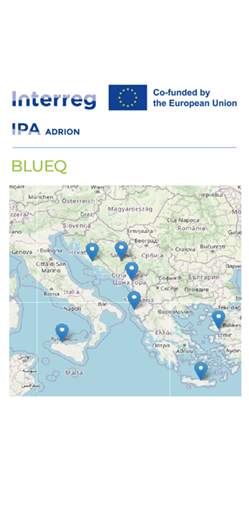
INTERREG - BLUEQ
Applied Solutions for Monitoring Coastal Habitats and Quantifying Blue Carbon Storage: An Integrated Approach for Sustainable Ecosystem Management.
Completion of the final BlueQ project sampling campaign in Croatia
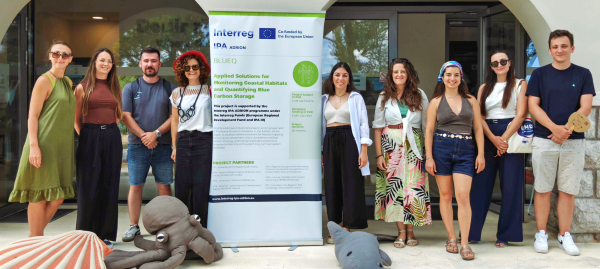 |
From July 7th to 9th 2026, the final sampling campaign of the BlueQ project was successfully carried out on the Žut island of the Dalmatian coast in Croatia, making the completion of the fieldwork phase of the project across the Adriatic-Ionian study areas. |
Participation of the IG at the 9th Environmental Conference of Macedonia
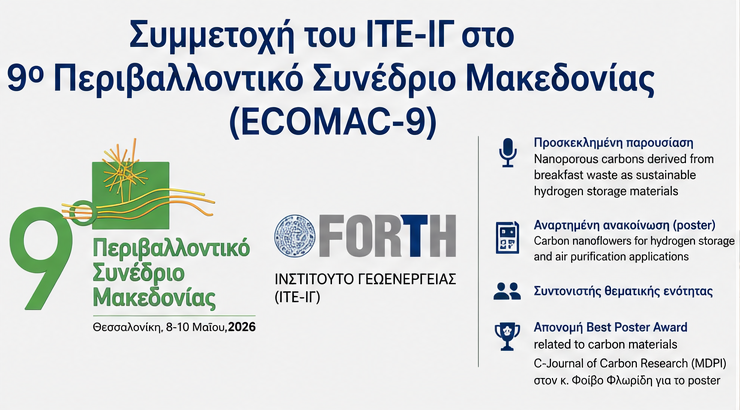 |
The Institute of GeoEnergy of FORTH was represented at the 9th Environmental Conference of Macedonia (ECOMAC-9), held in Thessaloniki between 8–10 May 2026, through the participation of its Principal Researcher, Dr. Nikolaos Kostoglou. |
Visit of the Deputy Minister of Development to the New Facilities of IG/FORTH
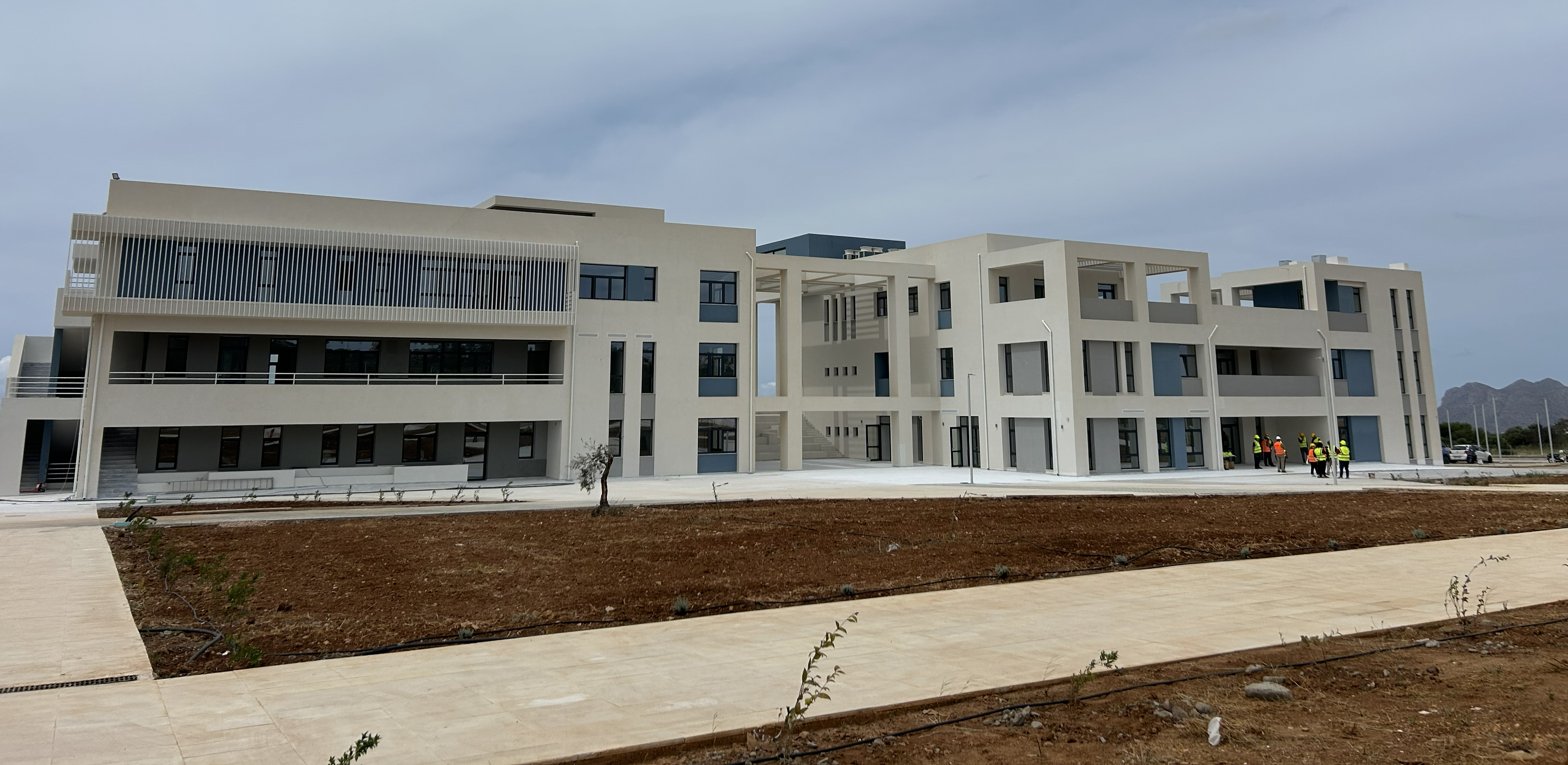 |
The new facilities of the Institute of Geoenergy of FORTH (Foundation for Research and Technology - Hellas), located at the University Campus in Akrotiri, Chania, were visited on Tuesday, May 19, by the Deputy Minister of Development, responsible for Research and Innovation, Mr. Stavros Kalafatis. |
The third BLUEQ sampling expedition in Vlore, Albania
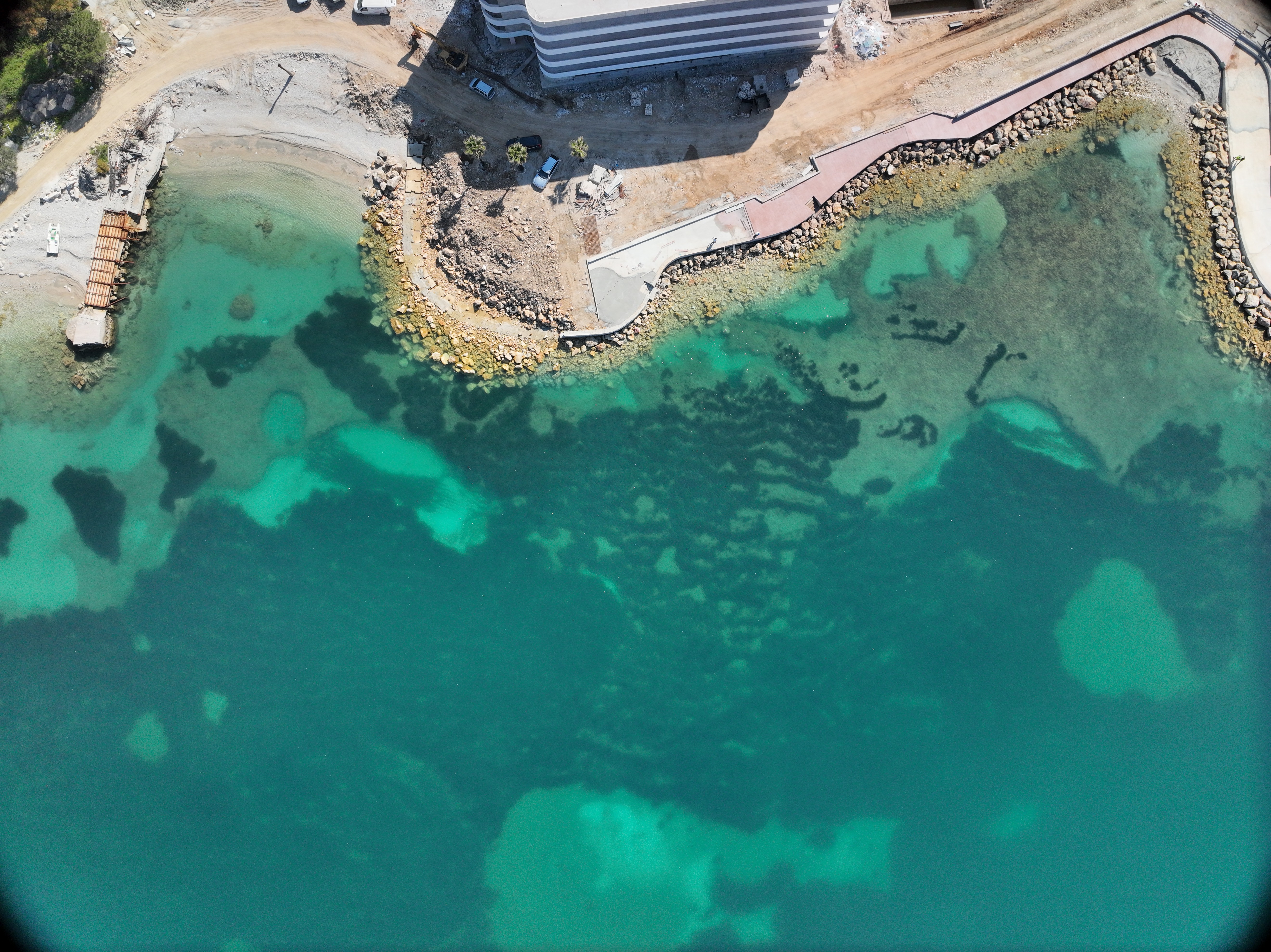 |
The third sampling expedition of the BLUEQ Project was carried out from 28 to 30 April 2026 in the Vlore area, Albania. Field activities focused on the Radhimë and Karaburun–Sazan regions and included scientific diving operations for the collection of sediment cores and biomass samples from Posidonia oceanica, as well as in situ measurements of environmental parameters. Remote sensing with drones was also conducted for mapping the study area. |
World Seagrass Day
 |
On the occasion of World Seagrass Day, the Institute of GeoEnergy - FORTH highlights the crucial role of Posidonia seagrass meadows in addressing climate change and safeguarding marine biodiversity. Posidonia meadows are among the most important blue carbon ecosystems worldwide. Through photosynthesis, they absorb carbon dioxide and store organic carbon within underlying sediments for thousands of years, due to the slow decomposition processes under anoxic conditions. At the same time, they provide essential habitats for numerous marine species and contribute to the stabilization of coastal zones. |
The second BLUEQ sampling expedition in Sicily has been successfully completed
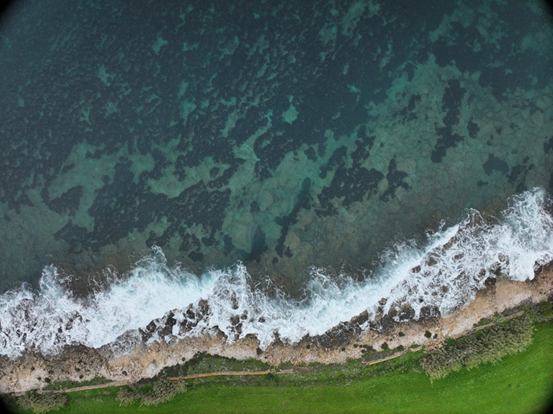 |
The second sampling expedition of the BLUEQ project was successfully carried out from 17 to 22 November 2025 in the Plemmirio Marine Protected Area (Plemmirio MPA), Sicily, with the participation and collaboration of several project partners. |
January 26 / International Day of Clean Energy (UN)
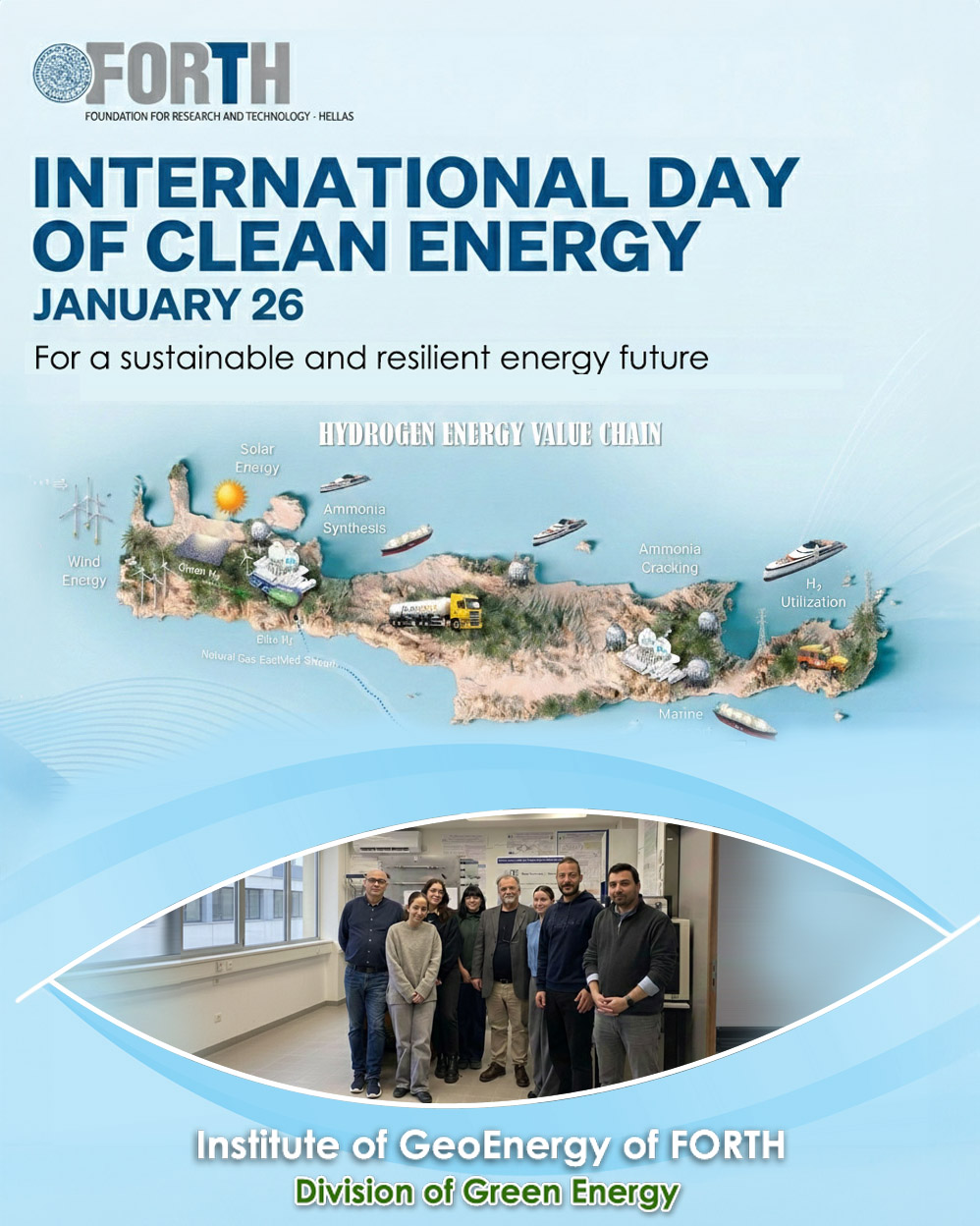 |
Clean energy is a cornerstone for tackling climate change and enabling a sustainable and resilient energy future. At the Institute of GeoEnergy (IG) of FORTH, research and innovation span the entire energy transition value chain, from geology and novel materials to integrated energy systems. |
Geosciences, Volume 15, Issue 11
 |
Cover story: The Eastern Mediterranean has been in the focus for hydrocarbon exploration over the last few decades. Sapropelic layers, with significant TOC, are known in this area to be considered as source rocks, particularly from the Neogene period. We investigate onshore occurrences of such geological layers of the Upper Miocene age from Gavdos Island, South Greece. By applying various laboratory methods, such as Rock-Eval pyrolysis, CHNS, and XRF, our results indicate gas-prone organic matter with variable preservation status, due to oxidation episodes under generally dysoxic-to-suboxic depositional conditions. Various CIA, C.I., Sr/Cu, and Rb/Sr inorganic indices have been used for investigating the paleoclimatic weathering and preservation status. Such sapropelic layers, if found in the deep offshore basins south of Crete, might generate important hydrocarbon accumulations, (https://www.mdpi.com/2076-3263/15/11). |